Posts

Guidance for Industry 256: Understanding Impacts on the Compounding Industry

  Guidance for Industry 256: Understanding Impacts on the Compounding Industry By Sarah Taylor, PharmD What is Guidance for Industry (GFI) 256? GFI 256 is a guidance for industry intended to provide clarification from the FDA on compounding animal drugs from bulk drug substances. The guidance does not apply to animal drugs compounded from FDA-approved animal or human drugs, which the FDA generally considers to be legal extra label uses of such drugs. 1 The FDA considers compounding animal drugs from bulk substances by pharmacists and veterinarians to violate aspects of the FD&C Act. Given the wide range of animal species and their varying needs, the FDA acknowledges that in some circumstances there may be no medically appropriate commercially available treatment options or commercially available FDA approved drugs may not be suitable for use as a source of active pharmaceutical ingredient (API) in some circumstances. This guidance lays out the circumstances in which the ...
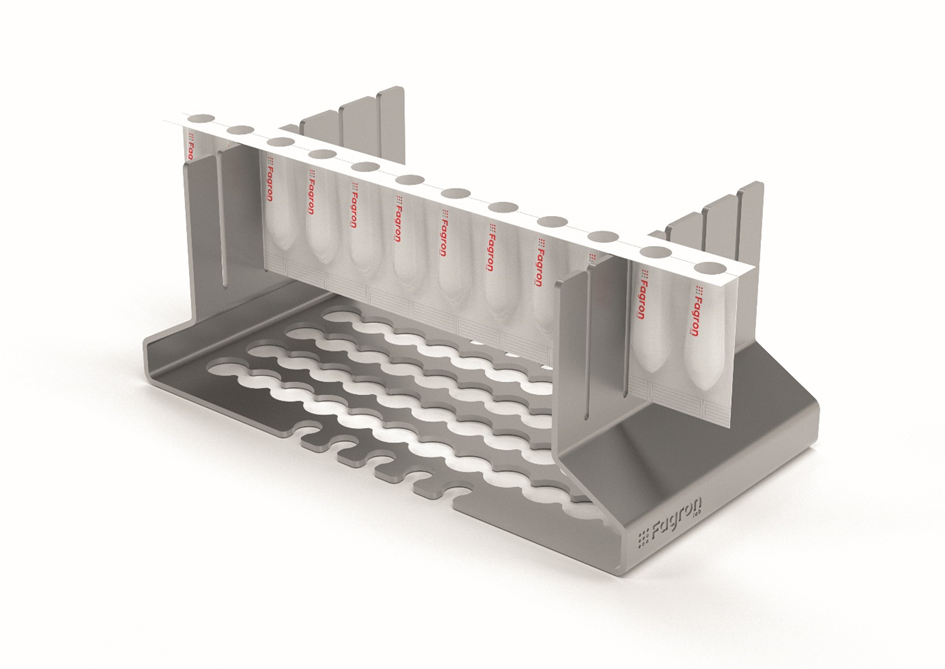
An Innovation Pathway of Suppository Molds: Problems, Solutions and Comparisons

Image
  An Innovation Pathway of Suppository Molds: Problems, Solutions and Comparisons by Süsen Gülce Erismis, BPharm MSc.   Definitions and History The term ‘insert’ refers a semi-solid pharmaceutical dosage form carrying active pharmaceutical ingredients (APIs) dispersed in a base that melts at body temperature or dissolves, applied by placing into naturally occurring body cavities aside from the mouth or rectum, such as the vagina (1). If the insert is intended for insertion into the vagina, it is called a vaginal insert, vaginal suppository, or pessary (2). On the other hand, if the dosage form is prepared for administration into the rectum, it is called a suppository (3). Due to their numerous advantages, both vaginal inserts and suppositories have been widely prepared in pharmacies since the 18 th century to achieve both systemic and local effects. The first suppositories were molded into a paper cone. However paper was not the best material to mold a suppository e...

Topical Options For Erectile Dysfunction

    Topical Options For Erectile Dysfunction By Sarah Taylor, PharmD Erectile dysfunction (ED) is a common patient concern, and its prevalence is strongly associated with age. Data from the US National Heath and Nutrition Examination Survey suggests that 8.2% of men between ages 40-49 years and 77.5% of men greater than 75 years old suffer from erectile dysfunction. 1 The prevalence of ED was also associated with other conditions such as diabetes mellitus, smoking, cardiovascular disease, hypertension, and obesity. 1 ED is most commonly managed with prescription phosphodiesterase-5 (PDE5) inhibitors used orally such as sildenafil, tadalafil, or vardenafil. 1 Commercially available injectables for ED such as alprostadil or phentolamine mesylate injections are also sometimes used. Compounded options for ED often include combination injectable products such as phentolamine mesylate/papaverine HCl/alprostadil combinations, commonly referred to as “Tri-mix”. Tri-mix inject...

Prostaglandin Analogues for Alopecia: Considerations for the use of Latanoprost or Bimatoprost

  Prostaglandin Analogues for Alopecia: Considerations for the use of Latanoprost or Bimatoprost By Sarah Taylor, PharmD Prostaglandin analogues such as bimatoprost or latanoprost have historically been used ophthalmically, where they are FDA approved for the use of elevated intraocular pressure. Bimatoprost 0.03% has also been approved for the management of hypotrichosis of the eyelashes. The mechanism of action is prostaglandin analogues interact with prostanoid receptors in the hair follicle. This is thought to stimulate resting follicles in the telogen phase and convert them to the anagen phase (associated with hair growth). 3 This same mechanism of action that increases eyelash growth is thought to be responsible for the growing data to support the use of prostaglandin analogues topically on the scalp for alopecia. Data Regarding Alopecia of the Scalp Latanoprost has been studied at a very wide range of concentrations. One double-blind placebo controlled study on topi...

Interpreting USP 800 Table 2 Primary Engineering Controls

Image
  Interpreting USP <800> Table 2 Primary Engineering Controls By Bryan Prince USP <800> is a relatively short document but packed with so much detail, requiring quite a bit of technical thinking and explanation, especially as it relates to the subject of engineering controls.   Pharmacists are not engineers, so one of the first questions is, how do I interpret Table 2. Engineering Controls for Nonsterile HD Compounding ? First, let’s dissect the two categories of engineering controls listed in Table 2.   The “C-PEC” is the containment primary engineering control, which is another name for a “powder hood”, also called a containment ventilated enclosure (CVE).   The table also lists other types of primary engineering controls, but for the sake of this discussion we will only focus on the most common type of hood found in a nonsterile compounding pharmacy.   The C-PEC will have either one single HEPA filter (see Figure-1) or two HEPA filters, ...

Excipients for Hard-shell Capsules: Why Cellulose is Not Enough

  Excipients for Hard-shell Capsules: Why Cellulose is Not Enough By Hudson Polonini,  BPharm MSc PhD Excipients are essential ingredients for a solid oral dosage form’s good performance, ensuring correct bioavailability, solubility, stability and dose accuracy. Therefore, choosing the right excipient is paramount for the adequate clinical performance of a robust dosage form. This choice needs to be based on technical parameters of both the active pharmaceutical ingredient (API) and the functionality of the dosage form itself – therefore science needs to be on the backbone of such process. As an example of the importance of the excipient’s role on the dosage form performance, we can consider the case of an intoxication that occurred in Australia in the late 1960s: epileptic patients who were taking phenytoin capsules experienced intoxications due to the replacement of the diluent. Calcium sulphate was changed to lactose, and this led to an increase of the mean serum conc...